Research, plan, implement, and review the plan instead of the code
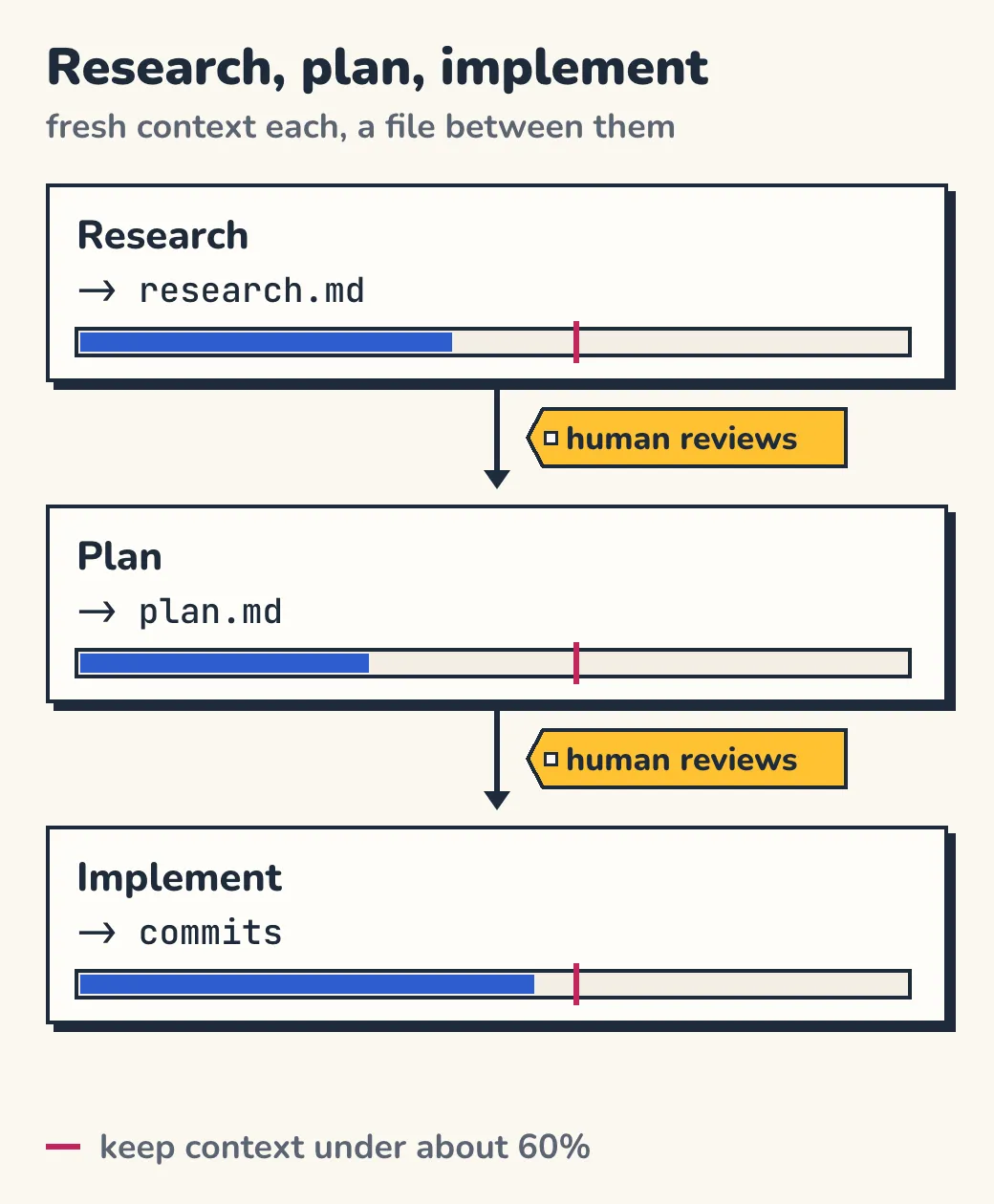
Split the work into three sessions with a written handoff each. A human reads 200 lines of plan, not 2000 lines of diff.
Reported by @juliandierker · Verified 2026-11-21
- Agent
- Claude Code
- Stack
- Any
Problem
One session that explores, decides and edits fills its context with search results and dead ends. By the time it writes code, the reasoning is buried. HumanLayer's point: a bad line in a plan becomes hundreds of bad lines of code.
Setup
Find how token refresh works today. Write what you find to research.md with
file:line references. Do not change any code.Read research.md. Write plan.md: the files to change, in order, and how we will
verify each step. Do not write code yet.Implement plan.md step by step. Run the checks after each step and tick it off.What happened
Review moves to where it is cheap: a wrong assumption in research.md takes a
minute to spot. HumanLayer keeps context use around 40 to 60 percent and
compacts on purpose between phases. AI Hero's tracer bullets fit inside phase
3: get one thin slice working end to end before widening.
Sources: Advanced context engineering for coding agents (HumanLayer), Tracer bullets (AI Hero).
Reproduce
Pick a change that touches several modules.
Run the three prompts in three fresh sessions, reading each file before the next.
Note where your review changed the plan.